Hanuman Chalisa Explained: Verse-by-Verse Meaning and Audio Guide
 Chantly EditorUpdated 11 min readHow we check texts
On this page
Read this chalisa in ChantlyMeaning, audio and a mala counter. Free on Android.
Table of Contents
- Introduction
- Understanding the Hanuman Chalisa Structure
- Key Verses with Meaning
- How to Recite Hanuman Chalisa Properly
- Benefits and Spiritual Significance
- Conclusion
Introduction
Composed in the 16th century by poet-saint Goswami Tulsidas, the Hanuman Chalisa consists of 40 powerful verses that millions worldwide recite daily for protection, strength, and spiritual blessings. The word “Chalisa” comes from “chalis,” meaning forty in Hindi, representing these devoted verses praising Lord Hanuman’s divine qualities.
Many devotees memorize the Chalisa through repetition without understanding the profound meaning behind each verse. While the rhythm and sound create spiritual benefits, missing the deeper significance means losing the complete transformational power this prayer offers. When chanted with understanding, each verse becomes a doorway to divine connection rather than just melodic repetition.
This complete guide provides everything needed to truly experience the Hanuman Chalisa: understanding its structure and themes, learning key verse meanings in simple English, accessing audio resources for proper pronunciation, discovering specific spiritual and practical benefits, and receiving step-by-step recitation guidance suitable for beginners and experienced devotees alike.
Whether starting a spiritual practice or deepening existing devotion, this guide transforms mechanical recitation into heartfelt prayer that brings the full blessings Hanuman offers to sincere devotees.
Understanding the Hanuman Chalisa Structure
The Hanuman Chalisa isn’t randomly arranged verses—it follows a deliberate structure that creates a complete spiritual journey from beginning to end.
The Complete Framework:
The Chalisa opens with two Dohas (couplets) that prepare the devotee’s heart. The first invocation verse beautifully states: “Shri Guru Charan Saroj Raj, Nij Man Mukur Sudhaari”—meaning “With the dust of the Guru’s lotus feet, I first clean the mirror of my heart.” This opening acknowledges that before praising divine qualities, one must purify their own consciousness. The Guru represents the guide toward truth, and like a lotus growing beautifully in murky water, remains unaffected by negativity.
The second opening verse shows humility: “Buddhi hina tanu jaanike, sumirau pavana kumaara”—”Knowing this body to be devoid of intelligence, I recall the Son of the Wind.” The devotee requests: “Grant me strength, intelligence and wisdom and remove my sorrows and shortcomings.” This sets the perfect tone of humble devotion before beginning the main verses.
The 40 Main Verses:
Written in Awadhi language using simple, accessible words rather than complex Sanskrit, Tulsidas designed the Chalisa for common people. Each verse (Chaupai) describes specific aspects of Hanuman’s character: his physical appearance, his divine exploits in service of Lord Rama, his supernatural powers, his unwavering devotion, and his protective blessings for devotees.
The verses flow rhythmically, making them naturally memorizable. This rhythm isn’t accidental—it creates a meditative state as devotees chant, allowing the meanings to penetrate deeper than intellectual understanding alone.
The Closing Dohas:
The final two couplets complete the prayer by inviting Hanuman to dwell permanently in the devotee’s heart alongside Lord Rama, Sita, and Lakshmana. This ending transforms the practice from occasional worship to constant divine presence in daily life.
Understanding this structure helps devotees recognize the Chalisa as a sacred progression: purification, praise, protection, and permanent blessing.
Key Verses with Meaning
While the complete 40 verses deserve deep study (available through audio courses and apps mentioned in the next section), understanding key themes helps devotees connect more meaningfully during recitation.
Opening Praise:
The first main verse declares: “Jai Hanuman Gyan Gun Sagar, Jai Kapisa Tihu Lok Ujagara”—”Hail Hanuman, ocean of wisdom and virtue, hail Lord of Monkeys who illuminates all three worlds.” This establishes Hanuman not just as physically strong but as an ocean of knowledge and enlightenment for all realms of existence.
Physical Description:
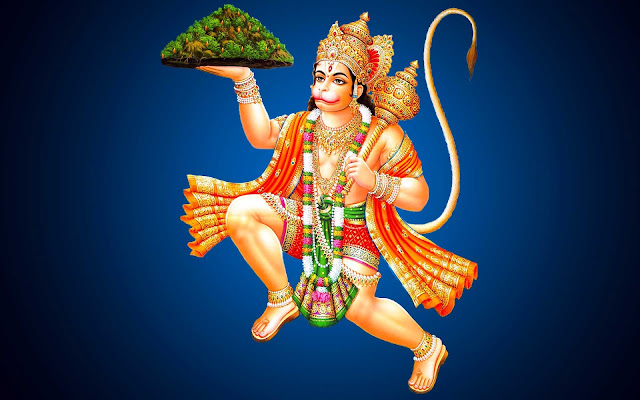
Early verses describe Hanuman’s golden-hued body, wearing earrings, with curly locks, holding a vajra (thunderbolt) and flag. These aren’t mere physical details—each element carries symbolic meaning. The golden color represents spiritual illumination, the vajra symbolizes indestructible strength, and the flag represents victory over ignorance.
Divine Exploits:
Multiple verses recount Hanuman’s incredible deeds during the Ramayana: crossing the ocean to Lanka in a single leap, taking a tiny form to secretly meet Sita in captivity, transforming into a fierce giant to burn Lanka, and carrying the entire Sanjeevani mountain when unable to identify the specific healing herb. These stories demonstrate adaptability, intelligence, devotion, and problem-solving beyond limitations.
One powerful verse states: “Yuga sahasra yojana para bhaanu, lilyo taahi madhura phala jaanu”—describing how as a child, Hanuman leaped toward the sun thousands of miles away, mistaking it for a sweet fruit. This childlike innocence combined with supernatural ability shows that true power comes without ego or self-consciousness.
Protection and Blessings:
The middle verses focus on Hanuman’s protective powers: “Bhoot pisach nikat nahin aavai, Mahavir jab naam sunavai”—”Evil spirits and ghosts do not come near when one chants the name of Mahavir Hanuman.” This verse alone brings comfort to devotees facing fear or negative energies.
Another crucial verse promises: “Sankat kate mite sab peera, Jo sumirai Hanumat Balbeera”—”All difficulties and suffering vanish for those who remember the mighty Hanuman.” This isn’t metaphorical—countless devotees report tangible relief from problems after sincere Chalisa practice.
The Essence:
Throughout all verses runs a single theme: complete devotion to Lord Rama combined with selfless service. Hanuman never seeks recognition, only opportunities to serve. This teaches devotees that true spiritual power comes through humility and surrender, not ego or desire for personal gain.
Learning these key meanings transforms the Chalisa from foreign words into deeply personal communication with divine presence.
How to Recite Hanuman Chalisa Properly
Starting a devotional practice feels less intimidating with clear, practical guidance that respects both tradition and modern life constraints.
Best Timing:
Tuesday is considered Hanuman’s special day, making it ideal for Chalisa recitation. Saturday also carries significance. However, daily practice at consistent times creates the strongest spiritual momentum. Early morning between 3:30-5:00 AM (Brahma Muhurta) is traditionally most powerful, as Hanuman himself is said to be in tapasya (meditation) on Lord Rama until sunrise. If morning practice isn’t possible, evening before sunset works beautifully. During times of difficulty or before important events, any moment becomes the right time.
Simple Preparation:
Find a quiet corner where interruptions are minimal. Sit comfortably with a straight spine—either cross-legged on the floor or upright in a chair with feet flat. Clean yourself beforehand through a quick wash or full bath if possible. The external cleaning mirrors internal purification.
Place a picture or small murti (statue) of Hanuman in front of you. Lighting a small lamp with desi ghee and incense, while optional, creates sacred atmosphere. Keep a glass of water nearby—the vibrations from recitation are believed to charge the water with positive energy that can be consumed afterward.
Learning Pronunciation:
For beginners unfamiliar with Hindi, pronunciation seems challenging initially. Free online courses break down the Chalisa verse-by-verse with audio guidance. YouTube channels offer slow-paced tutorials with synchronized text in Devanagari script, transliteration, and English translation. Mobile apps provide word-by-word pronunciation guides that pause between phrases.
The key understanding: intention matters far more than perfect pronunciation. Hanuman responds to sincere devotion, not linguistic perfection. Start where you are, improve gradually, and never let pronunciation fears prevent practice.
The Recitation Process:
Before beginning the Chalisa itself, chant “Om” three times, then “Sri Ram Jai Ram Jai Jai Ram” 108 times if possible, or at least 27 times. This invokes Lord Rama’s presence before praising his greatest devotee.
Read the Chalisa aloud clearly, even if you’ve memorized it. Reading from text maintains accuracy and respect. Don’t rush—pronounce each word distinctly. The complete recitation takes 10-15 minutes at comfortable pace.
For specific intentions, devotees traditionally recite multiple times: 7 repetitions for general blessings, 11 times for removing obstacles, or 108 times for fulfilling specific wishes during special occasions.
After Completion:
Sit quietly for 2-3 minutes after finishing, allowing the vibrations to settle. This brief meditation amplifies the practice’s effects. Offer a simple prayer in your own words, then touch the ground with your right hand and bring it to your forehead as a gesture of grounding and gratitude.
Consistency creates transformation—daily 15-minute practice outweighs occasional hour-long sessions. Building this habit takes approximately 21 days, after which most devotees find themselves looking forward to their Chalisa time as the day’s highlight.
Benefits and Spiritual Significance
The Hanuman Chalisa isn’t merely beautiful poetry—it carries tangible effects recognized across centuries of devotional practice.
Spiritual Transformation:
Regular recitation cultivates Hanuman’s primary quality: unwavering devotion. The Chalisa gradually shifts consciousness from self-centered thinking toward service-oriented living. Ego naturally diminishes when repeatedly contemplating someone who possessed unlimited power yet remained completely humble. This transformation happens subtly but profoundly over consistent practice.
The verses also create protection from negative energies. The specific sounds and vibrations form a spiritual shield around practitioners. Devotees report feeling safer, calmer, and more centered even during challenging circumstances. Evil influences—whether external forces or internal negative thoughts—find no foothold where Hanuman’s name resounds regularly.
Mental and Emotional Benefits:
Anxiety and depression significantly decrease with daily Chalisa practice. The rhythmic recitation calms the nervous system, similar to meditation. The act of complete surrender to divine protection lifts the burden of trying to control everything through personal effort alone.
Fear dissolves when regularly connecting with Hanuman’s fearless energy. Whether fear of failure, fear of others’ opinions, or existential fears, devotees report courage emerging naturally through practice. One verse specifically addresses this: “Sankat kate mite sab peera”—all suffering and difficulties vanish through remembering Hanuman’s strength.
Concentration and mental discipline improve markedly. The practice of focusing on each word, maintaining rhythm, and completing the full recitation trains the mind to sustain attention. This benefit extends beyond the practice itself into daily activities, work, and relationships.
Physical and Practical Benefits:
Traditional belief holds that Hanuman worship strengthens physical health and immunity. The life force (prana) increases through the breathing patterns naturally created during recitation. Devotees report faster recovery from illness and fewer sick days overall.
Obstacles blocking progress—in career, relationships, or personal goals—begin clearing. Hanuman as “Sankat Mochan” (remover of difficulties) creates pathways where none seemed to exist. This isn’t magical thinking but rather the natural result of approaching challenges with the confidence, wisdom, and persistence that Hanuman embodies.
Protection from planetary afflictions, particularly Saturn’s challenging periods, is a well-recognized benefit. Astrologically inclined devotees specifically use Hanuman Chalisa during difficult dashas (planetary periods) with reported relief.
Nightmares and Sleep:
Those experiencing frequent bad dreams find relief through evening Chalisa recitation. The protective energy created before sleep guards the subconscious mind. Many devotees keep the Chalisa playing softly while sleeping, finding peace and rest that previously eluded them.
The cumulative effect of all these benefits creates life transformation beyond the sum of individual parts. Devotees don’t just feel better temporarily—they become stronger, wiser, and more capable versions of themselves.
Conclusion
The Hanuman Chalisa’s 40 verses offer far more than a prayer to recite—they provide a complete spiritual practice combining devotion, wisdom, and divine protection when approached with understanding. Written by Tulsidas to be accessible to everyone regardless of education or status, the Chalisa remains as relevant today as five centuries ago because human needs for strength, courage, and divine connection remain timeless.
Start your practice this week by learning the opening and closing Dohas. Use free audio resources from YouTube channels, mobile apps, or online courses that break down pronunciation verse-by-verse. Set a realistic goal: memorize one verse every few days while understanding its meaning, rather than rushing through all 40 without comprehension. Establish a consistent daily time—whether early morning or peaceful evening—and protect that 15 minutes as sacred.
The beauty of Hanuman Chalisa practice is its accessibility. Perfect pronunciation, elaborate setups, and hours of time aren’t required. A quiet corner, sincere heart, and 10-15 minutes create the foundation. Hanuman, who served Lord Rama with complete devotion while never seeking recognition, responds to genuine devotion regardless of external perfection. Start where you are, with what you have, and trust the process.
Thousands before have discovered this ancient practice transforms not just spiritual life but every aspect of daily existence—bringing courage during challenges, clarity during confusion, and constant companionship of divine presence. The question isn’t whether the Chalisa works, but whether you’re ready to experience its transformative power firsthand.
Quick Reference Box: Hanuman Chalisa Essentials
Structure:
- 2 Opening Dohas (Invocation)
- 40 Main Verses (Chaupais)
- 2 Closing Dohas (Blessing)
Author: Goswami Tulsidas (circa 1575 CE)
Language: Awadhi (accessible to common people)
Recitation Time: 10-15 minutes
Best Days: Tuesday, Saturday, or daily
FAQ
Can I recite Hanuman Chalisa without knowing Sanskrit or Hindi?
Yes, use transliterated versions in your language and follow audio guides; Hanuman responds to sincere devotion, not perfect pronunciation
How many times should I recite it daily?
Once daily is sufficient for regular practice; 7, 11, or 108 times on special occasions or for specific intentions
What’s the best time to recite Hanuman Chalisa?
Tuesday mornings or evenings are most auspicious, but any time works; early morning and before sunset are traditionally preferred
Do I need any special setup or items?
Not required, though a clean space, Hanuman picture, lamp, and incense enhance the experience; intention matters most
How long does it take to recite the complete Chalisa?
Approximately 10-15 minutes for one complete recitation at moderate pace
Can women recite Hanuman Chalisa during menstruation?
Yes, there are no restrictions; mental purity and devotion matter more than physical state
What benefits come from regular Hanuman Chalisa practice?
Protection from obstacles, increased courage and strength, mental peace, removal of fears, success in endeavors, and spiritual growth
Count your 108 with Chantly.
Tap the circle to try it. In the app, the counter keeps your rounds and stays private to you.

Chantly's guides are written and checked by the Chantly editorial team. Read our editorial policy.