Shiva Tandava Stotram: Complete Analysis with Meaning & Benefits
 Chantly EditorUpdated 28 min readHow we check texts
On this page
Read this stotram in ChantlyMeaning, audio and a mala counter. Free on Android.
Introduction
The Shiva Tandava Stotram stands as one of Sanskrit literature’s most powerful, rhythmically intense, and spiritually potent hymns 16 verses of extraordinary poetic beauty capturing the cosmic dance (tandava) of Lord Shiva. Composed under the most dramatic circumstances by King Ravana while trapped beneath Mount Kailash, this sacred text represents the pinnacle of devotional poetry, combining sophisticated Sanskrit literary artistry with raw devotional intensity born from genuine spiritual crisis.
Unlike gentler prayers suitable for beginners, the Tandava Stotram demands everything from practitioners: advanced Sanskrit comprehension to appreciate its complex compound words and poetic devices, significant memorization effort to master its fast-paced verses, deep Shaivite philosophical understanding to grasp its layered meanings, and most importantly, the spiritual maturity to approach Lord Shiva in his most dynamic, fierce, and awesome aspect as Nataraja the cosmic dancer whose movements create and destroy universes.
Many devotees encounter this stotram through beautiful musical renditions or temple recitations during Mahashivratri, feeling immediately drawn to its hypnotic rhythm and power. Yet attempting to practice this text without understanding its origin story, structural sophistication, proper approach, and place within Shaiv
ite tradition often leads to frustration or superficial engagement that misses the profound transformation this advanced practice offers serious devotees.
This complete analysis provides everything needed for deep engagement with the Tandava Stotram: the legendary composition story revealing how Ravana’s arrogant attempt to lift Mount Kailash transformed into devotional masterpiece when Shiva trapped him beneath it; detailed structural breakdown showing the sophisticated Sanskrit literary devices and rhythmic patterns; comprehensive exploration of key themes, imagery, and philosophical concepts woven throughout the verses; proven spiritual and material benefits from obstacle removal to artistic enhancement; and practical recitation methods for this challenging text including learning resources, proper timing, traditional guidelines, and realistic expectations for the patient long-term practice this advanced sadhana requires.
Whether you’re a dedicated Shiva devotee seeking to deepen your practice, a Sanskrit literature student wanting to understand one of the language’s poetic masterpieces, or a spiritual seeker drawn to Shaivism’s more intense practices, this analysis offers scholarly depth combined with devotional guidance for approaching Ravana’s magnificent offering to the Lord of the Dance.
The Legendary Story – Ravana’s Composition
Understanding the extraordinary circumstances of this stotram’s composition transforms it from abstract Sanskrit verses into living prayer born from intense devotional crisis, making the text’s power comprehensible and its approach more reverential.
Ravana: Scholar, Musician, Shiva Devotee
Before exploring the specific incident, understanding Ravana himself proves essential. While the Ramayana portrays him primarily as villain who abducts Sita and faces destruction by Rama, this represents only one dimension of his complex character. Traditional texts also describe Ravana as:
A supreme scholar who mastered all four Vedas and their six auxiliary sciences (Vedangas) phonetics, ritual, grammar, etymology, metrics, and astronomy. His intellectual prowess was legendary, earning him recognition even among gods and sages.
An accomplished musician who played the veena (stringed instrument) with extraordinary skill, composing works that pleased even celestial beings. His musical abilities weren’t mere entertainment but represented deep understanding of sound’s spiritual power.
A fierce Shiva devotee (Shiva Bhakta) who regularly worshipped Lord Shiva, performed intense tapasya (austerities), and received numerous boons from the deity he revered above all others. Despite his later actions that led to downfall, his Shiva devotion remained genuine and powerful.
A being of tremendous physical strength possessing ten heads symbolizing mastery of all directions and vast knowledge, and arms powerful enough to shake mountains. This strength combined with ego created the crisis from which the Tandava Stotram emerged.
The Mount Kailash Incident
The dramatic event that birthed this stotram unfolded as follows:
Ravana was traveling through the sky in his Pushpaka Vimana (celestial flying chariot) a magnificent vehicle he had obtained through previous conquests. His journey took him toward Mount Kailash, the sacred Himalayan peak that serves as Lord Shiva and Goddess Parvati’s divine abode.
As the vimana approached Kailash’s vicinity, it suddenly stopped mid-flight, unable to proceed further. Nandi (Shiva’s bull vehicle and gatekeeper) had locked the mountain region, preventing anyone from disturbing the divine couple’s privacy. This celestial security measure halted even Ravana’s powerful flying chariot.
Rather than respectfully circumventing the restricted area, Ravana’s pride was inflamed. How dare any force stop HIM the mighty Ravana, conqueror of realms, master of powers, lord of Lanka? His arrogance completely overshadowed his devotion in that moment.
In a display of supreme hubris, Ravana descended from his vimana and decided he would simply lift Mount Kailash itself and move it aside. Using his tremendous strength, he placed his twenty arms beneath the mountain and began to lift.
The entire mountain began to shake violently. Rocks tumbled, the earth trembled, and the heavens themselves seemed to shudder at this audacious act. Inside their abode, Goddess Parvati felt the trembling and became frightened, reaching out to Shiva for reassurance.
Lord Shiva, completely calm and untouched by the disturbance, smiled gently at his consort. Then, almost casually, he pressed down his big toe.
That single toe pressing down created more pressure than Ravana could lift not just pinning the mountain securely but actually trapping Ravana’s hands beneath it. Despite his enormous strength, Ravana found himself completely immobilized, crushed under the weight his own arrogance had invited.
The Transformation: From Arrogance to Devotion
Trapped beneath the mountain traditional accounts vary on duration from days to years Ravana faced a crucial spiritual crossroads. He could either remain consumed by rage and wounded pride, or he could recognize the divine lesson being taught.
Gradually, understanding dawned. His attempt to lift Kailash represented the ultimate ego delusion trying to control and move the very seat of divine consciousness, trying to make the Supreme Power accommodate his convenience. The effortless ease with which Shiva’s single toe subdued his full strength demonstrated the infinite gap between human power and divine force.
Rather than anger or despair, a different emotion emerged: pure devotion. Ravana recognized that he remained trapped only because of Shiva’s will, and that Shiva maintained him alive only through grace. His scholarship, strength, and powers meant nothing; only surrender and devotion could free him.
In this state of complete surrender, Ravana began to compose. But having no musical instruments except his own body, he tore tendons from his own arms to create strings, using his ten heads as percussion instruments while singing. This self-offering using his very body parts as devotional instruments represented ultimate sacrifice of ego.
The composition that emerged, the Shiva Tandava Stotram, captured both the terror of recognizing Shiva’s awesome power and the ecstasy of devotional surrender. The verses describe Shiva’s cosmic dance with breathless intensity, the rhythmic pace mimicking both the frantic heartbeat of someone trapped and the accelerating rhythm of the divine dance itself.
Shiva’s Response and Blessing
Lord Shiva, pleased by the genuine devotion expressed through such magnificent poetry and self-sacrificial musical offering, appeared before Ravana. The transformation from arrogant demon-king to humble devotee had accomplished what no amount of force could it had touched Shiva’s compassionate heart.
Shiva released Ravana from beneath the mountain and bestowed extraordinary blessings:
The divine sword Chandrahas (meaning “moon’s laughter”) a celestial weapon of immense power that would serve Ravana well until his final battle with Rama.
Invincibility against all beings except humans a boon that gave Ravana tremendous confidence but ironically contained the seeds of his eventual downfall, as he dismissed humans as beneath concern.
Recognition as one of Shiva’s foremost devotees despite Ravana’s flaws and future terrible actions, Shiva acknowledged the genuine devotion expressed in that moment beneath Kailash.
Acceptance of the Tandava Stotram itself as one of the most pleasing hymns ever composed in his praise ensuring that this text would remain spiritually potent throughout history.
Why This Story Matters Profoundly
This origin narrative isn’t mere mythology but encodes several crucial spiritual teachings:
Shiva’s Non-Judgmental Nature: The fact that Shiva blessed Ravana who would later commit terrible acts including abducting Sita demonstrates that the divine judges only the sincerity of devotion in each moment, not the devotee’s overall moral record. This offers hope to all flawed practitioners that genuine devotion right now can invoke grace regardless of past mistakes.
The Power of Devotion to Transform Crisis: Ravana could have remained trapped indefinitely, consumed by rage. Instead, his choice to transmute the crisis into devotional offering transformed imprisonment into liberation. This provides template for handling our own difficult situations.
Ego’s Inevitable Encounter with Divine Power: Ravana’s attempt to lift Kailash represents every ego’s eventual confrontation with reality greater than itself. The toe press represents how effortlessly divine reality subdues ego, not through violence but through simple assertion of what is.
Ultimate Offering is Self-Offering: Ravana’s use of his own body parts as instruments represents the principle that the greatest worship involves offering oneself one’s time, energy, talents, and ultimately one’s separate sense of self.
Scholarship Serves Devotion: Ravana’s vast learning enabled him to compose verses of extraordinary sophistication. His knowledge wasn’t wasted but found its highest purpose in devotional expression. This validates intellectual and artistic pursuits when dedicated to divine.
Understanding this dramatic backdrop transforms every recitation of the Tandava Stotram into participation in Ravana’s transformation from arrogance to devotion, from trying to control divine forces to surrendering to them, from pride to humility, from strength to grace.
Structure and Overview of the Stotram
The Tandava Stotram’s sophisticated structure reveals why it’s revered by Sanskrit scholars while its rhythmic intensity makes it appealing even to those who don’t understand every word.
Compositional Structure
The stotram consists of 16 main verses (some versions include a 17th concluding verse called phala shruti describing benefits). Each verse follows complex Sanskrit metrical patterns while maintaining internal coherence through several unifying devices:
Refrain Pattern: Most verses conclude with or incorporate “Shivaya” creating rhythmic anchor and devotional focus. This repetition allows listeners to join even without knowing full verses.
Progressive Intensity: The verses build cumulatively, starting with physical descriptions of Shiva’s form and progressing toward cosmic functions, devotional surrender, and finally petitions for blessing. This creates emotional arc from awe to intimacy.
Breath-Taking Pace: The rapid succession of compound Sanskrit words creates breathless quality, as though the composer is struggling to describe something too vast for language to capture adequately which perfectly mirrors Ravana’s situation trapped beneath Kailash.
Sophisticated Poetic Devices: The text employs numerous Sanskrit literary techniques (alankaras) including:
- Yamaka (alliteration and assonance)
- Upama (metaphor and simile)
- Slesha (double meanings)
- Vakrokti (indirect expression)
These create multiple meaning layers that scholars continue discovering through careful analysis.
The Tandava Theme: Cosmic Dance
Understanding “Tandava” itself proves essential for grasping the stotram’s core imagery. Tandava refers to Shiva’s vigorous, dynamic dance not social entertainment but cosmic activity through which the universe is created, maintained, and eventually dissolved.
Traditional iconography describes several tandava types:
- Ananda Tandava: The bliss dance expressing divine joy
- Rudra Tandava: The fierce destructive dance
- Sandhya Tandava: The twilight dance at day’s end
- Samhara Tandava: The dissolution dance ending cosmic cycles
The stotram references various tandava aspects, presenting Shiva not as static meditator but as dynamic force in constant motion. This dancing quality infuses the verses themselves they don’t sit still but move with accelerating rhythm like the dance they describe.
Key Sanskrit Literary Features
What makes this text particularly challenging and rewarding for Sanskrit learners:
Extensive Alliteration: Consonant clusters repeat throughout, creating sonic patterns that enhance memorability while challenging pronunciation. For example, verses employ repeated “j,” “bh,” “dh,” and “r” sounds that require careful articulation.
Compound Words (Samasa): Sanskrit allows virtually unlimited word compounding, and this stotram exploits that capability fully. Single “words” may actually represent entire phrases or even sentences compressed through sophisticated grammatical rules. These compounds must be carefully parsed to extract full meaning.
Multiple Meters: While maintaining overall rhythmic consistency, the verses employ various chandas (meters) including:
- Anushtubh (most common Vedic meter)
- Indravajra
- Upendravajra
- Malini
These metrical variations create subtle rhythmic shifts that Sanskrit-literate audiences appreciate.
Onomatopoeia: Certain passages employ sounds mimicking Shiva’s damaru drum (“dhimi dhimi”), the anklets on his dancing feet, and other elements of the cosmic dance. These make the text naturally musical even without instrumental accompaniment.
Thematic Organization Through the 16 Verses
While the verses don’t follow rigid linear organization, general thematic patterns emerge:
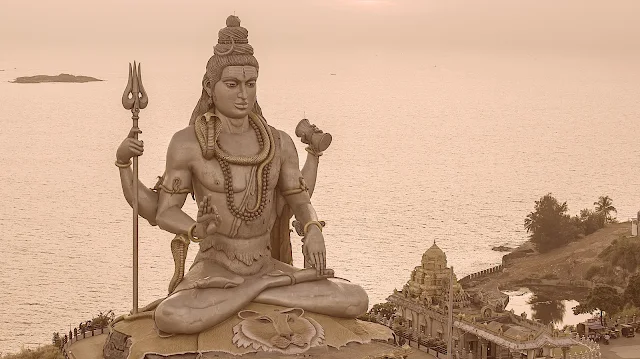
Opening Verses (approximately 1-5): Establish Shiva’s physical appearance matted locks with Ganga river flowing through them, crescent moon adorning his forehead, serpents as ornaments, sacred ash covering his body, third eye on his forehead. These vivid descriptions allow devotees to visualize the deity clearly.
Middle Verses (approximately 6-11): Shift toward Shiva’s cosmic functions and divine activities the tandava dance itself, the damaru drum creating primal sound, the third eye’s destructive fire, the trampling of demons, the roles as creator-preserver-destroyer. These verses move from static form to dynamic action.
Later Verses (approximately 12-16): Turn more devotional and petitionary directly addressing Shiva, requesting blessings, taking refuge, expressing surrender, and culminating in prayer for liberation. The emotional tenor shifts from objective description to subjective relationship.
Throughout this progression, certain images and themes recur, creating unity despite the rapid-fire presentation.
Difficulty Level and Prerequisites
This stotram represents advanced sacred text study for several reasons:
Sanskrit Complexity: The sophisticated grammar, extensive compounds, and archaic vocabulary challenge even those with Sanskrit training. Beginners will find themselves constantly consulting dictionaries and commentaries.
Memorization Challenge: The 16 verses total approximately 200+ lines of complex Sanskrit. Unlike shorter prayers memorized in days, this typically requires months of dedicated daily practice.
Pronunciation Demands: The alliterative passages and consonant clusters require clear, precise articulation. Sloppy pronunciation not only loses the aesthetic beauty but potentially alters meanings.
Rhythmic Pace: Once memorized, maintaining the intended rapid pace while preserving clarity challenges even experienced chanters. The breathless quality is intentional but difficult to sustain.
Depth of Meaning: Surface translation barely scratches the text’s philosophical and devotional depths. True appreciation requires study of Shaivite philosophy, familiarity with Puranic mythology, and understanding of Sanskrit poetics.
For these reasons, traditional teachers typically recommend that students first master simpler Shiva prayers and mantras Om Namah Shivaya, Mahamrityunjaya Mantra, Shiva Ashtakam before attempting the Tandava Stotram.
Place in Shaivite Literary Tradition
The Tandava Stotram occupies honored position within the vast Shaivite devotional literature:
It’s frequently paired with Bilvashtakam, Shivashtakam, and other popular Shiva hymns in temple worship and personal practice, creating comprehensive devotional sequence.
During Mahashivratri (the great night of Shiva occurring annually in February/March), temples and individual devotees traditionally recite this stotram multiple times as part of all-night vigil.
Classical Indian musicians have created elaborate renditions, treating the text as vehicle for showcasing vocal and instrumental virtuosity while maintaining devotional spirit.
Traditional Bharatanatyam and other classical dance forms incorporate the stotram, with dancers performing tandava movements while singers recite the verses, creating multimedia devotional experience.
Despite its specific Shaivite focus, even Vaishnavas and followers of other traditions respect this text as literary and spiritual masterpiece demonstrating devotion’s power regardless of sectarian boundaries.
Musical and Rhythmic Nature
The stotram’s origin as song composed by Ravana who was accomplished veena player means it possesses inherent musicality:
Traditional renditions often employ ragas (melodic frameworks) considered appropriate for Shiva worship Bhairav, Darbari Kanada, Nattai, and others that evoke both gravitas and devotion.
The internal rhythm allows it to be chanted effectively even without instruments, though accompaniment with damaru (Shiva’s drum), veena, or modern instruments enhances the experience.
Modern recordings range from traditional temple-style recitation by Vedic scholars to elaborate musical productions by Bollywood and Carnatic singers, each valid for different devotional contexts.
The repetitive sounds and building intensity create trance-like quality during extended recitation consciousness naturally shifts toward meditative absorption, which many consider the text’s primary purpose beyond its literal meanings.
Understanding this sophisticated structure helps devotees approach the text with appropriate respect for its literary achievement while appreciating why mastering it requires dedication and why the effort proves so rewarding spiritually and intellectually.
Verse-by-Verse Meaning Highlights
Thematic Analysis of Key Sections:
Opening Section – Physical Description
The initial verses establish vivid visualization of Shiva’s iconic form through rapid-fire imagery:
The Matted Locks (Jata): Perhaps the most frequently mentioned feature throughout the stotram. Shiva’s matted locks aren’t merely hair but represent ascetic practice and yogic power. The verses describe how these locks fly wildly during the dance, creating visual image of unfettered divine energy in motion.
Ganga in the Hair: The holy river Ganga flows through Shiva’s matted locks, symbolizing how divine grace (represented by Ganga’s purifying waters) descends from transcendent reality (Shiva’s head) to material world (earth where Ganga flows). This image captures Shiva’s role as mediator between absolute and manifest.
Crescent Moon: The moon on Shiva’s forehead represents time cycles (the moon marks months), immortality (the moon never fully dies, always being reborn), and cooling grace that balances the destructive fire of his third eye. This juxtaposition of fire and moon throughout the verses shows opposites unified in Shiva.
Serpents as Ornaments: Cobras coiling around Shiva’s neck, arms, and body aren’t fearsome but decorative, showing his complete mastery over death (which serpent venom represents) and fear itself. The serpent also symbolizes kundalini energy in yoga, suggesting Shiva’s complete mastery of spiritual energies.
Third Eye: The eye in Shiva’s forehead that burned Kamadeva (god of desire) to ash represents wisdom that destroys ignorance, the capacity to see beyond material appearance into ultimate reality, and the destructive power necessary before creation can occur.
Sacred Ash (Vibhuti): Shiva’s body smeared with ash from cremation grounds reminds devotees of physical impermanence and the ego’s ultimate dissolution. What appears morbid actually represents the most profound truth everything returns to fundamental elements.
These physical descriptions aren’t mere poetry but encode Shaivite philosophy’s core teachings the unity of opposites, the necessity of destruction for creation, the impermanence underlying apparent solidity, and the transcendence of conventional categories like beautiful/ugly, auspicious/inauspicious.
Middle Section – Cosmic Functions and Divine Powers
After establishing Shiva’s appearance, the stotram shifts to describing his activities and powers:
The Tandava Dance Itself: Multiple verses describe the actual dance feet striking the ground, hands gesturing dramatically, the entire universe trembling from the dance’s power. This isn’t metaphorical traditional teaching holds that Shiva’s dance literally creates and dissolves cosmic cycles.
The Damaru Drum: Shiva holds a small hourglass-shaped drum (damaru) which he plays during his dance. The drum’s sound represents Aum the primal vibration from which manifestation emerges. Some verses employ onomatopoeia mimicking the drum’s rhythm.
Creation-Preservation-Destruction: While Brahma creates and Vishnu preserves, Shiva’s primary cosmic function is dissolution (pralaya). The verses emphasize this destructive aspect not as malevolent but as necessary for renewal, like winter’s death enabling spring’s rebirth.
Trampling of Demons: Several verses describe Shiva dancing on demons or corpses, representing the destruction of ignorance, ego, and negative forces that prevent spiritual realization. The fierce imagery communicates that enlightenment isn’t gentle but often involves destroying cherished illusions.
The Fierce Smile: Shiva’s smile during his tandava combines beauty and terror it’s simultaneously the gentle smile of a beneficent father and the fierce grin of a warrior destroying evil. This paradoxical smile appears throughout the verses, capturing Shiva’s nature as both terrible and auspicious (his name means “the auspicious one”).
Philosophical Depth – Unity of Opposites:
A crucial theme pervading these middle verses is the Shaivite doctrine that apparent opposites are actually unified:
- Beautiful and terrible
- Creative and destructive
- Transcendent and immanent
- Form and formless
- Fierce and gentle
Shiva embodies all these pairs simultaneously, teaching that ultimate reality transcends conceptual categories. The verses force this recognition through their rapid juxtaposition of contradictory images.
Later Section – Devotional Surrender
The concluding verses shift from objective description to direct devotional relationship:
Taking Refuge: The verses explicitly state taking shelter at Shiva’s lotus feet, the ultimate surrender that characterizes bhakti (devotional) practice. This marks the stotram’s transformation from scholarly description to heartfelt prayer.
Requesting Obstacle Removal: Like most Shiva prayers, the stotram petitions for removal of obstacles (vighna), both material difficulties and spiritual impediments to realization.
Seeking Liberation (Moksha): The ultimate request is for moksha complete liberation from the cycle of birth and death. This establishes the stotram’s purpose as not merely obtaining worldly benefits but achieving spiritual freedom.
Expressing Devotion: The final verses contain explicitly devotional language absent from earlier descriptive sections, creating emotional arc that mirrors Ravana’s own journey from objective observation (while trying to lift Kailash) to subjective surrender (while trapped beneath it).
Recurring Symbolic Elements:
Throughout all sections, certain symbols appear repeatedly:
Moon and Fire: These opposites appear together constantly the cooling moon on Shiva’s head while destructive fire blazes from his third eye. This teaches that ultimate reality contains all opposites, that creation and destruction aren’t separate but aspects of single reality.
Serpent Imagery: Beyond mere decorative feature, serpents throughout the verses represent:
- Kundalini energy in yogic practice
- Death and its transcendence
- Time cycles (serpents shed skin, representing renewal)
- Unconscious forces brought into consciousness
Water and Fire Combination: Ganga (water) flows through Shiva’s locks while his third eye contains fire. These elemental opposites shouldn’t coexist yet do in Shiva, again teaching unity of opposites.
Key Sanskrit Terms to Understand:
While studying any translation, pay attention to these crucial recurring terms:
- Jata: Matted locks (appears frequently)
- Chandra: Moon/crescent
- Ganga: Holy river
- Sarpa/Bhujanga: Serpent
- Tandava: Cosmic dance
- Damaru: Shiva’s drum
- Trilochana: Three-eyed (Shiva)
- Vibhuti: Sacred ash
- Bhairava: Fierce form of Shiva
- Nataraja: Lord of Dance
- Sharanam: Refuge/shelter
Understanding these key terms allows following the thematic threads even when complete verse meanings prove elusive.
Poetic Devices Creating Multiple Meanings:
Sanskrit’s capacity for multiple interpretations means single verses often contain layered meanings:
- Surface Level: Literal description of Shiva’s physical form and dance
- Philosophical Level: Encoding Shaivite doctrines about reality’s nature
- Yogic Level: References to specific energetic practices and states
- Devotional Level: Expression of bhakti sentiment and surrender
- Cosmological Level: Describing actual creation-destruction processes
Serious study gradually reveals these layers, making the text perpetually fresh rather than exhausting its meaning quickly.
While this thematic overview can’t replace studying the actual Sanskrit verses with good commentary, it provides framework for understanding the stotram’s progression and core teachings, allowing more meaningful engagement when you access complete authorised versions.
Comprehensive Benefits and Recitation Methods
The Tandava Stotram’s power born from Ravana’s crisis and blessed by Shiva himself creates comprehensive transformation for sincere practitioners while requiring proper approach to this advanced sadhana.
Spiritual and Material Benefits
Obstacle Removal (Vighna Nashana)
Like most Shiva worship, this practice specifically removes blocks whether external circumstances preventing progress or internal psychological barriers limiting potential. The stotram’s origin story itself demonstrates obstacle removal Ravana’s ultimate obstacle (being trapped) dissolved through devotional offering.
Victory Over Enemies
Traditional teaching holds that Ravana received Chandrahas sword and invincibility through this very composition. While modern practitioners shouldn’t expect literal weapons, the practice does build psychological strength and confidence that translates into real-world effectiveness against opposition and challenges.
Spiritual Protection
Regular recitation creates protective energy field around practitioners. Whether understood literally (actual energy shield) or psychologically (confidence and positive energy that repel negativity), devotees consistently report feeling “guarded” and finding that potential dangers mysteriously avoid them.
Ego Dissolution
Perhaps the practice’s most profound benefit mirrors Ravana’s own transformation the gradual recognition that ego’s attempts to control ultimately prove futile, and that surrender to divine will paradoxically grants more authentic power than ego-driven striving ever could.
Fear Transformation
The stotram explicitly describes Shiva’s most awesome, fierce aspects his destructive dance, his terrifying third eye, his trampling of demons. Regular exposure to these fierce images gradually transforms practitioners’ relationship with fear itself, recognizing that what appears terrifying contains hidden auspiciousness.
Artistic and Creative Enhancement
Given Ravana’s accomplishments as musician and poet, and given the composition’s own literary brilliance, the practice traditionally enhances creative abilities musical skill, poetic capacity, artistic expression, and creative problem-solving. Modern practitioners report breakthroughs in creative projects during periods of intensive practice.
Direct Shiva Connection
Most valuable benefit transcends material gains the practice establishes intimate personal relationship with Lord Shiva. The stotram doesn’t merely describe distant deity but creates direct communication, with practitioners developing sense of Shiva’s immediate presence and guidance.
Mental and Cognitive Benefits
Enhanced Memory
Memorizing 16 complex Sanskrit verses provides intense cognitive training. The mental discipline required strengthens memory circuits that then enhance retention in other areas academic, professional, or personal.
Improved Concentration
The sustained focus required during recitation maintaining pronunciation accuracy while following meaning while visualizing imagery while maintaining devotion develops exceptional concentration capacity that transfers to all focused work.
Linguistic Development
For those studying Sanskrit, this text provides advanced immersion. The sophisticated grammar, extensive vocabulary, and complex poetic devices accelerate language learning beyond what simpler texts offer.
Emotional Regulation
The practice of expressing both fierce and gentle emotions during recitation mirroring Shiva’s own combination of terror and grace develops emotional range and regulation. Practitioners report being less emotionally reactive while remaining fully capable of feeling depth.
Who Should Practice This Advanced Sadhana
Prerequisites and Readiness
This isn’t typically recommended as first Shiva practice. Ideal practitioners have:
- Some Sanskrit familiarity (though determination can compensate)
- Established Shiva devotion through simpler practices (Om Namah Shivaya, basic Shiva puja)
- Serious spiritual commitment rather than casual interest
- Patience for long-term practice (months/years to master fully)
- Respect for tradition and willingness to approach properly
Those Who Will Particularly Benefit
- Advanced Shiva devotees seeking deeper connection
- Sanskrit students wanting challenging literary text
- Musicians and artists seeking creative inspiration
- Those facing significant obstacles requiring Shiva’s intervention
- Practitioners drawn to Shaivism’s more intense aspects
- Anyone feeling specific call toward this practice
Learning and Recitation Methods
Phase 1: Learning Through Listening (Weeks 1-4)
Don’t begin by trying to memorize. Instead:
Find Quality Recordings:
Search YouTube for traditional recordings:
- “Shiva Tandava Stotram by Ravindra Sathe” (classical rendition)
- “Shiva Tandava Stotram by Shankar Mahadevan” (musical version)
- Temple recitations from Varanasi or South Indian Shiva temples (authentic pronunciation)
- Sanskrit scholars’ versions for clear articulation
Passive Absorption:
- Listen daily during commute, exercise, or household work
- Don’t try to memorize yet just let rhythm and sounds become familiar
- Pay attention to overall flow and recurring phrases
- Notice where verses begin and end based on musical/rhythmic patterns
Active Listening:
- Follow along with transliteration (Roman script version)
- Match sounds you hear with written syllables
- Identify recurring words and phrases across verses
- Begin noticing Devanagari script if learning Sanskrit writing
Phase 2: Understanding Meanings (Weeks 5-8)
While continuing to listen, begin studying meanings:
Get Reliable Commentary:
- Gita Press editions with Hindi/English translations
- Online resources like Sanskrit Documents website
- YouTube videos with line-by-line explanation
- Books specifically analyzing Tandava Stotram
Study Method:
- Read one verse’s translation daily
- Understand key Sanskrit terms
- Visualize the imagery described
- Contemplate philosophical meanings
- Don’t worry about memorizing yet
Phase 3: Gradual Memorisation (Weeks 9+)
Only after familiarization through listening and understanding:
Start Small:
- Begin with just ONE verse
- Practice it 10-20 times daily for several days
- Don’t move to next verse until first is solid
- Quality over quantity better to know two verses well than ten poorly
Use Multiple Methods:
- Write verse repeatedly (kinesthetic learning)
- Chant while looking at text
- Chant from memory, checking text when stuck
- Record yourself and listen back
- Use mnemonic devices for difficult passages
Realistic Timeline:
- 1-2 verses per month is reasonable pace
- Means 8-16 months to memorize all 16 verses
- This patient approach ensures lasting retention
- Don’t rush this is advanced practice requiring time
Daily Practice Structure
Basic Daily Practice (15-20 minutes)
- Preparation (2-3 minutes):
- Sit before Shiva image/lingam if available
- Light lamp and incense (optional but traditional)
- Apply vibhuti (sacred ash) to forehead if following tradition
- Wear rudraksha mala (traditional but not mandatory)
- Take few deep breaths to center
- Preliminary Invocation (2 minutes):
- Chant Om Namah Shivaya 108 times or
- Recite simpler Shiva prayer first
- This prepares consciousness for more advanced practice
- Main Recitation (10-15 minutes):
- Recite memorized verses once fully
- Or practice the 1-2 verses currently learning
- Use transliteration as aid when needed
- Focus on pronunciation, meaning, and devotion
- Visualize Shiva’s dancing form throughout
- Conclusion (1-2 minutes):
- Brief silent meditation on Shiva
- Express gratitude for ability to practice
- Request blessings for continued learning
Intensive Practice for Special Occasions
Monday Practice (Shiva’s Day
- More elaborate setup with flowers, offerings
- Multiple recitations (3, 5, or 7 times)
- Combined with fasting if following that tradition
- Extended meditation after recitation
Pradosh Time (Twilight)
- The sandhya (twilight) period considered especially auspicious for Shiva
- Evening practice during this time particularly powerful
- Traditionally sunset time on Mondays and Fridays
Mahashivratri Practice
- The great night of Shiva (annual festival)
- All-night vigil with repeated recitations
- Many devotees aim for 11, 21, or 108 recitations through the night
- Combined with fasting and temple visits
Traditional Guidelines and Requirements
Purity Considerations:
- Bathe before practice (daily practice ideal, minimum weekly)
- Wear clean clothes
- Practice in clean, dedicated space
- Traditionally avoid during menstruation, recent death in family (3 days), after consuming non-vegetarian food/alcohol
Attitude Requirements:
- Sincere devotion rather than mechanical repetition
- Respect for tradition and lineage
- Humility about one’s practice level
- Intention aligned with spiritual growth, not ego display
What to Avoid:
- Don’t chant to show off scholarship or pronunciation
- Don’t use improperly (with harmful intentions toward others)
- Don’t mix with intoxicants or non-vegetarian consumption on practice days
- Don’t expect instant magical results without effort
Common Challenges and Solutions
Challenge 1: “The Sanskrit is too difficult”
- Solution: Use transliteration until comfortable
- Many devotees successfully practice using Roman script only
- Pronunciation improves naturally with consistent practice
- Consider basic Sanskrit course if wanting deeper engagement
Challenge 2: “I can’t maintain the fast pace”
- Solution: Slow down initially speed comes naturally over time
- Better to chant slowly with clarity than rush and garble
- The rapid pace developed in Ravana over extended practice
- Your version may always be slower that’s perfectly acceptable
Challenge 3: “I keep forgetting verses I thought I knew”
- Solution: This is normal, especially with 16 verses
- Return to problem verses for focused daily practice
- Use spaced repetition review older verses weekly
- Accept that complete mastery may take years
Challenge 4: “I don’t feel anything special during practice”
- Solution: Benefits accumulate subtly over time
- Don’t judge each session in isolation
- Keep practice journal noting changes over months
- Trust the process even without dramatic experiences
Challenge 5: “I don’t have time for daily practice”
- Solution: Even 5 minutes of one verse better than nothing
- Consider morning commute or before sleep
- Quality and consistency matter more than duration
- Brief daily practice superior to occasional long sessions
Audio and Learning Resources:**
YouTube Channels
- Sanskrit Scholars’ recitations (clear pronunciation)
- Classical musicians’ renditions (understanding musicality)
- Temple recordings (traditional devotional approach)
- Line-by-line teaching videos (for learning)
Apps and Websites
- Sanskrit Documents website (texts with translations)
- Learn Sanskrit apps with audio
- Hindu devotional apps with daily prayer features
- Spotify/Gaana for audio versions
Books
- Gita Press publications (widely respected)
- Sanskrit literature analysis books
- Shaivite philosophy texts providing context
- Poetry analysis for literary appreciation
Combining with Other Practices
The Tandava Stotram integrates beautifully with:
- Rudram Chamakam: The Vedic Shiva hymns practice both for comprehensive Shiva worship
- Om Namah Shivaya: The panchakshara (five-syllable) mantra simpler daily practice with Tandava Stotram weekly
- Lingashtakam, Bilvashtakam: Other shorter Shiva hymns creating complete devotional sequence
- Shiva Puja: Full ritual worship incorporating Tandava Stotram as centerpiece
- Meditation: Silent Shiva meditation before or after recitation
- Temple Visits: Recite at Jyotirlinga or other Shiva temples during pilgrimage
Tracking Progress and Maintaining Motivation
Keep Practice Journal
- Date and duration of practice
- Verses currently working on
- Difficulties encountered
- Insights or special experiences
- Observable benefits manifesting
Set Realistic Milestones
- First verse memorized
- Five verses mastered
- Complete stotram memorized
- Able to recite without transliteration
- Able to chant at traditional pace
Connect with Community
- Join local Shiva bhajan groups
- Online forums of Shiva devotees
- Find practice partners for mutual support
- Attend temple recitations during festivals
Celebrate Progress
- Acknowledge milestones reached
- Express gratitude to Shiva for ability to learn
- Share knowledge with interested others (teaches best)
- Deepen practice by studying commentaries
For Advanced Practitioners
Once complete stotram is memorized:
Deepen Understanding
- Study multiple traditional commentaries
- Learn Devanagari script for direct reading
- Explore connections to Shaivite philosophy texts
- Study related stotras for comparative understanding
Intensive Practice Periods
- Commit to 40-day intensive (multiple daily recitations)
- Mahashivratri all-night vigil with 108 recitations
- Shravan month (monsoon month sacred to Shiva) daily practice
- Pilgrimage to major Shiva temples with practice there
Share the Practice
- Teach interested students (teaching deepens own understanding)
- Lead group recitations during festivals
- Create study resources for others
- Model proper devotional approach for beginners
Realistic Expectations
Short-Term (3-6 months):
- Memorize 4-8 verses
- Develop basic pronunciation competence
- Experience occasional moments of devotional absorption
- Notice some benefits (focus, confidence, obstacles resolving)
Medium-Term (6-12 months):
- Memorize all 16 verses
- Comfortable with basic meanings
- Regular devotional experiences during practice
- Clear observable benefits in life
- Established sustainable daily practice
Long-Term (1-3 years):
- Effortless recall of all verses
- Deep understanding of meanings and philosophy
- Practice feels like natural part of identity
- Profound life transformation evident
- May feel called to teach others
This patient, respectful approach honors the text’s advanced nature while making it accessible to sincere practitioners willing to invest time and devotion required for authentic engagement with Ravana’s magnificent offering to Lord Shiva.
Conclusion
The Shiva Tandava Stotram born from the extraordinary moment when arrogant demon-king Ravana found himself trapped beneath Mount Kailash and transformed his crisis into devotional masterpiece stands as one of Sanskrit literature’s most powerful, rhythmically intense, and spiritually potent sacred texts. These 16 verses of extraordinary poetic sophistication capture the cosmic dance of Lord Shiva with breathless intensity, describing the deity in his most dynamic, fierce, and awesome aspect as Nataraja, the cosmic dancer whose movements literally create and destroy universes.
This represents advanced spiritual practice, not casual devotional dabbling. The sophisticated Sanskrit, complex poetic devices, rapid-fire pace, philosophical depth, and sheer memorization challenge demand serious commitment. Traditional wisdom recommends that practitioners first establish foundation through simpler Shiva practices regular Om Namah Shivaya chanting, basic Shiva puja, familiarity with Shiva’s mythology before attempting this text that even accomplished Sanskrit scholars approach with reverence and humility.
Begin your journey with patient listening rather than rushed memorization. Spend weeks simply absorbing traditional recordings let the rhythm, melody, and Sanskrit sounds become familiar before attempting to reproduce them. Search YouTube for quality versions by Ravindra Sathe, Shankar Mahadevan, or traditional temple recitations. Listen during commute, exercise, household work passive absorption prepares consciousness for active learning.
Simultaneously study the meanings using reliable commentaries from Gita Press, sacred-texts.com, or scholarly YouTube channels providing line-by-line explanation. Understanding what you’re chanting transforms mechanical repetition into conscious devotion. Learn the key imagery Shiva’s matted locks with Ganga flowing through, crescent moon on forehead, serpents as ornaments, third eye blazing, damaru drum sounding visualizing these elements during recitation deepens connection.
When beginning actual memorization, embrace patient long-term approach. Start with just one verse, practicing it daily for a week or more until completely solid before moving to the next. Memorizing one to two verses per month means the complete stotram takes 8-16 months this realistic timeline prevents frustration while ensuring lasting retention. Better to know five verses deeply than all sixteen superficially.
Establish sacred practice space before Shiva image or lingam if possible, light simple lamp and incense, apply vibhuti (sacred ash) to forehead if following tradition, and approach with genuine devotion rather than treating as academic exercise or ego display. The stotram’s very origin story Ravana’s transformation from arrogance to surrender teaches that this practice demands humility despite its sophisticated scholarship.
Lord Shiva’s acceptance of Ravana’s devotion despite his flaws offers profound encouragement. The deity blessed this composition and granted extraordinary boons not because Ravana was morally perfect he certainly wasn’t but because the devotion expressed in that moment beneath Kailash was genuine, intense, and completely self-offering. This teaches that the path remains open to all sincere seekers regardless of past mistakes or current imperfections. What matters is the quality of devotion right now, not the practitioner’s overall moral record.
The benefits obstacle removal, victory over challenges, spiritual protection, ego dissolution, fear transformation, artistic enhancement, and most importantly, direct intimate connection with Lord Shiva manifest gradually through consistent practice rather than arriving as instant magical results. Keep simple journal noting changes over weeks and months. Trust the cumulative process even when individual sessions feel unremarkable. The transformation happens in the spaces between practices as much as during them.
Combine this advanced practice with continued simpler Shiva worship. Daily Om Namah Shivaya chanting, regular temple visits, Monday fasting if following that tradition, and general Shaivite lifestyle of devotion, meditation, and ethical living create complete spiritual path rather than treating Tandava Stotram as isolated technique divorced from holistic spiritual life.
The cosmic dancer awaits your participation in his eternal tandava through this sacred text that has moved Shiva devotees for millennia. Every sincere attempt at pronunciation, every effort toward memorization, every moment of devotional absorption becomes your offering just as Ravana offered his own torn tendons as veena strings and his own heads as drums. Begin today with patient humble heart, trust the long-term process, and watch how engagement with this magnificent stotram gradually transforms consciousness, dissolves obstacles, and establishes living relationship with Lord Shiva in his most awesome and beautiful dancing form.
Jataa Kata Hasambhrama Bhramanilimpanirjhari…
Victory to the Lord of the Cosmic Dance! May his grace bless all sincere practitioners!
Om Namah Shivaya
Count your 108 with Chantly.
Tap the circle to try it. In the app, the counter keeps your rounds and stays private to you.

Chantly's guides are written and checked by the Chantly editorial team. Read our editorial policy.