Dhanteras 2026: Date, Puja Muhurat & What to Buy
 Chantly EditorPublished 8 min readHow we check texts
Dates for 2026Reviewed on
On this page
Pray along with ChantlyMeaning, audio and a mala counter. Free on Android.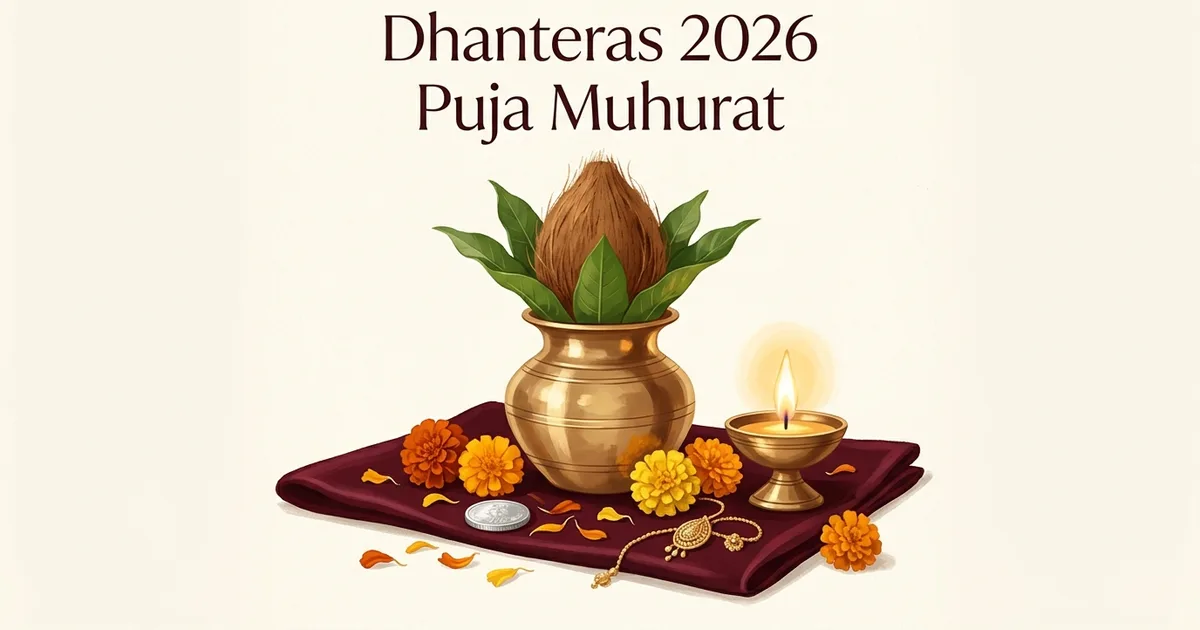
Dhanteras falls on Friday 6 November 2026, opening the five-day Diwali festival across India. In New Delhi, the most auspicious Dhanteras Puja muhurat is between 6:02 PM and 7:57 PM during Pradosh Kaal and Vrishabha Kaal. Devotees dedicate this sacred evening to worship Lord Dhanvantari, Goddess Lakshmi and Lord Kubera, setting the spiritual foundation for the upcoming Diwali puja.
Dates for 2026, checked against Drik Panchang (New Delhi) on 1 November 2026. Muhurat times vary by city because sunrise and sunset differ, so check yours on Drik Panchang. We update this page every year.
When is Dhanteras in 2026? Date and puja muhurat
Dhanteras, also called Dhantrayodashi, is observed on the thirteenth lunar day of the Krishna Paksha in the month of Kartik. In 2026, Trayodashi Tithi begins at 10:30 AM on Friday 6 November and ends at 10:47 AM on Saturday 7 November.
Because the evening Pradosh Kaal coincides with Trayodashi Tithi on Friday, Dhanteras puja and rituals take place on 6 November 2026.
| Event or Muhurat | Date | Timing (New Delhi) |
|---|---|---|
| Trayodashi Tithi begins | 6 November 2026 | 10:30 AM |
| Trayodashi Tithi ends | 7 November 2026 | 10:47 AM |
| Pradosh Kaal | 6 November 2026 | 5:32 PM to 8:09 PM |
| Vrishabha Kaal (Sthir Lagna) | 6 November 2026 | 6:02 PM to 7:57 PM |
| Dhanteras Puja Muhurat | 6 November 2026 | 6:02 PM to 7:57 PM |
| Yama Deepam | 6 November 2026 | 5:32 PM to 8:09 PM |
Vrishabha Kaal is a fixed sign (Sthir Lagna). Tradition considers worshipping Goddess Lakshmi during a fixed lagna auspicious so that blessings remain steady in the home.
City timings differ across India based on local sunset. For example, Mumbai observes Pradosh Kaal later in the evening than Kolkata or Delhi. Devotees should verify exact local muhurat timings for their city on Drik Panchang before starting the rituals.
What to buy on Dhanteras (and what to avoid)
Buying auspicious items on Dhanteras is an age-old custom. Families visit markets during the day to bring new articles home before performing the evening prayers.
Auspicious items to buy
- Brass utensils: Brass is considered the traditional metal of Lord Dhanvantari. Buying a brass pot, jug or thali is one of the most traditional choices.
- Gold and silver: Gold jewellery, silver coins, or silver idols of Lakshmi and Ganesha are popular choices. Silver represents calmness and pure light.
- New broom (jhadu): A broom represents cleanliness and the removal of negative energies from the household.
- Coriander seeds (dhaniya): Buying whole dry coriander seeds is an ancient agrarian custom. Devotees offer these seeds during puja and later plant them or store them in home lockers.
- Earthen diyas: Purchasing clay lamps for the Diwali illumination honours the earth and supports traditional potters.
- Lakshmi and Ganesha idols: Clay or metal idols for Diwali night are purchased on Dhanteras day.
When you purchase new utensils, tradition advises never bringing them inside empty. Devotees place some water, sweets, or rice grains inside the vessel before carrying it across the threshold.
Items to avoid buying
- Iron: Iron is traditionally linked with Saturn (Shani) and is avoided for auspicious festival purchases on Dhanteras.
- Sharp instruments: Knives, scissors, blades and iron tools are not bought on this day.
- Glassware: Glass is associated with Rahu in traditional astrological symbolism and is avoided.
- Synthetic plastic goods: Traditional households prefer natural metals and earthen items over plastic.
Dhanteras puja vidhi step by step
Dhanteras worship honours Lord Dhanvantari, Goddess Lakshmi, Lord Kubera, and Lord Ganesha. The puja is performed at home during the evening Pradosh Kaal.
- Clean the puja space: Clean the worship area in the north or east direction of your home. Lay a fresh red or yellow cloth over a wooden platform (chowki).
- Set up the kalash: Fill a copper or brass kalash with clean water, gangajal, a betel nut, a silver coin, and akshat (unbroken rice). Place five mango leaves around the rim and set a coconut wrapped in a sacred red thread (kalava) on top.
- Install the deities: Place idols or images of Goddess Lakshmi, Lord Ganesha, and Lord Dhanvantari on the platform. If you have an image or yantra of Lord Kubera, place it beside Goddess Lakshmi.
- Light the oil lamp: Light a brass diya with ghee or sesame oil to witness the puja.
- Invoke Lord Ganesha: Offer red flowers, akshat, and a tilak of sandalwood paste to Lord Ganesha, seeking the removal of all obstacles.
- Worship Lord Dhanvantari: Offer flowers and tulsi leaves to Lord Dhanvantari. Recite his invocation mantra:
Devotees seek physical well-being, acknowledging the divine source of medicine and natural healing. Remember that devotional prayer accompanies sound medical advice and healthy habits, rather than replacing medical care.
ॐ धन्वन्तरये नमः॥
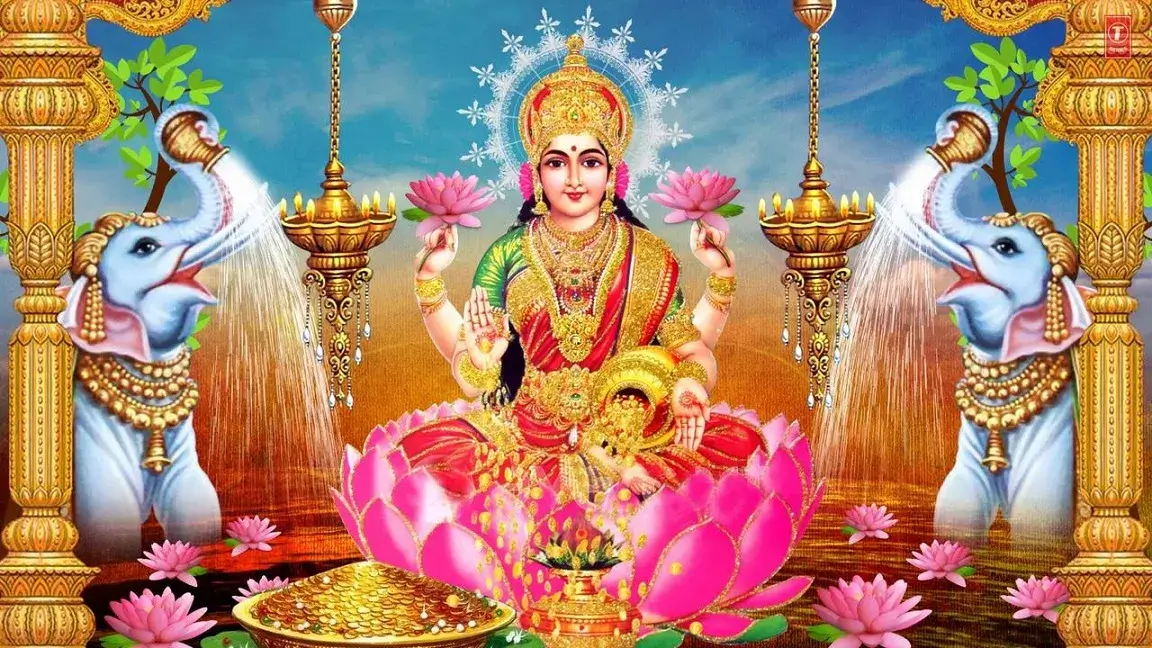
- Worship Goddess Lakshmi and Lord Kubera: Offer lotus flowers or marigolds, akshat, kumkum, and sweets. Devotees often chant the Lakshmi Chalisa to honour the Goddess.
- Offer naivedya: Offer kheer, batasha, seasonal fruits, and dry fruits. You can count your mantras using the japa counter in the Chantly app.
- Perform the aarti: Conclude the ceremony by performing the aarti for Lord Ganesha and Goddess Lakshmi with your family.
Puja samagri list for Dhanteras
Gather these essential materials before the evening muhurat begins:
| Category | Items needed |
|---|---|
| Altar setup | Wooden platform (chowki), fresh red or yellow cloth, kalash |
| Sacred offerings | Ganga jal, roli (kumkum), chandan (sandalwood paste), akshat (unbroken rice) |
| Foliage and flowers | Fresh mango leaves, marigolds, lotus flower, betel leaves and nuts (paan-supari) |
| Lamps and fragrance | Brass diyas, cotton wicks, cow ghee, mustard oil, dhoop sticks, camphor |
| Food offerings (prasad) | Batasha, kheer or milk sweets, fresh fruits, clove and cardamom |
| New purchases | Newly bought brass vessel, silver coin, coriander seeds |
Yama Deepam ritual and timings
Yama Deepam is a distinct Dhanteras ritual performed at dusk. Devotees light a special lamp dedicated to Lord Yama, the guardian of the southern quarter and judge of dharma, to pray for protection against untimely harm.
On Friday 6 November 2026, Yama Deepam is observed during Pradosh Kaal, between 5:32 PM and 8:09 PM in New Delhi.
To perform Yama Deepam:
- Take a four-faced lamp (chau-mukhi diya) of clay or kneaded dough.
- Fill with mustard or sesame oil and arrange four cotton wicks facing the four cardinal directions.
- Place a coin and black sesame seeds in the oil.
- Light all four wicks after completing the household puja.
- Place the lamp outside the entrance on a mound of puffed rice (kheel), facing south.
- Bow in reverence to Lord Yama for protection from untimely harm and step inside.
Why Dhanteras is celebrated: story of Lord Dhanvantari
Dhanteras unites two distinct traditional accounts: the appearance of the physician of the gods and the story of light averting darkness.
The emergence of Lord Dhanvantari
According to the Bhagavata Purana, Canto 8, Chapter 8, the devas and asuras churned the cosmic ocean (Samudra Manthan) for divine treasures. On Kartik Krishna Trayodashi, Lord Dhanvantari emerged holding a golden vessel of amrita (nectar) and sacred texts of medicine.
Revered as an avatar of Lord Vishnu who revealed Ayurveda, he is the patron of healers, which is why Dhanteras is also observed as National Ayurveda Day. The Vishnu Purana, Book 1, Chapter 9, also describes this cosmic churning, recounting how Goddess Lakshmi emerged shortly after to fill the universe with grace.
The legend of King Hima’s son
In popular folklore, tradition tells of the young son of King Hima, whose horoscope foretold death by snakebite four days after marriage. His bride illuminated their chambers with oil lamps and heaped gold and silver ornaments at the entrance.
When Lord Yama arrived disguised as a serpent, the dazzling light of lamps and metals blinded him. He sat listening to devotional songs all night until the fatal hour passed. Devotees remember this devotion by lighting lamps and displaying metal ornaments on Dhanteras night.
Dhanteras 2027 date in India calendar
For those planning ahead with the Indian festivals calendar, Dhanteras 2027 will occur earlier in the autumn season.
| Detail | Information for 2027 |
|---|---|
| Dhanteras 2027 date | Wednesday, 27 October 2027 |
| Trayodashi Tithi start | 1:03 AM on 27 October 2027 |
| Trayodashi Tithi end | 10:50 PM on 27 October 2027 |
| Pradosh Kaal (New Delhi) | 5:40 PM to 8:14 PM |
| Vrishabha Kaal (New Delhi) | 6:43 PM to 8:38 PM |
In 2027, the entire Trayodashi Tithi falls within Wednesday 27 October, making the date uniform across India. The five-day Diwali festival in 2027 continues with Choti Diwali on 28 October and main Diwali on Friday 29 October 2027.
Count your 108 with Chantly.
Tap the circle to try it. In the app, the counter keeps your rounds and stays private to you.

Chantly's guides are written and checked by the Chantly editorial team. Read our editorial policy.